
Asteya, one of the ethical practices of yoga (Yamas And Niyamas), is the practice of non-stealing. Now most of us grew up learning that stealing from others is not okay. We learned at a young age when a playmate or sibiling took a beloved toy, how upsetting it feels to have something taken from us. I’d call this a basic practice of Asteya, stealing in the physical world. What Asteya really invites us to do, though, is take a look at on a deeper, self-transformation level of all the ways we emotionally and energetically steal from others and ourselves.
STEALING FROM OTHERS
When I first read Debora Adele’s book “Yamas and Niyamas,” (which I highly recommend), the first practice from the book was to notice when I steal other’s stories or engage in ‘one-upping’. I thought this was an interesting concept and remembered times when others have done this to me. But, I wondered how much I did it to others.

Photo from Pexels
Stealing another’s story is when someone shares something about their lives and we end up ‘one upping them’ by jumping into our own story, whether it’s positive or negative. An example would be this: You share with me that you just had a horrendous time driving in a winter storm and right after you’re finished, I immediately tell you about my most horrendous time driving in a winter storm.
It may seem innocent, but how does it make you feel? For me, when this happens, I notice I shut down because my need to be hear isn’t met. It even gives me the sense that my experience doesn’t really matter. I find when I’m around others that do this often, I stop sharing about myself. It leads to feeling disconnected.
Practicing this exercise has helped me (though I’m far from perfect) to just listen and let go of my own story I’m reminded of, to be present for someone else. In the end, my story is just that, a story that I had long forgotten and sharing it doesn’t really make all that much of a difference…except that is steals from another. I believe that we jump in with our own stories because we feel connected due to a similar experience. We are trying to share that sense of connection but in the end our sharing ends up cutting off that connection.
What other ways we can convey the connection we feel instead without interrupting with our own story?
STEALING FROM OURSELVES
The longer I’m committed to path of yoga, the more aware I become of all the ways I steal from myself. Most of this ‘stealing’ happens due to my own fear of not being ___ enough. I know I’m not alone in this. Most women I work with discover this deep fear behind many of their reactions.
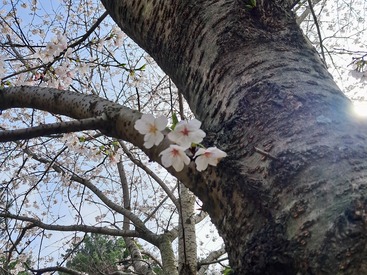 A few years ago, I was taking a walk in the spring, watching birds doing their thing along the path. It hit me – these birds aren’t sitting around wondering if they are enough. “Is my wingspan big enough, are my feathers sitting just right, did I lay that grass down for my nest in just the right spot, or am I good enough parent?” They just do what comes naturally and instinctually. And so do all the plants starting to sprout and the clouds moving across the sky and the insects buzzing around.
I realized my human mind is creating this “not enough” belief. Nothing else in nature is fearful of this. This realization has helped me to practice grounding back into the present when I feel doubt and fear. By looking out at nature, it is a reminder that I am enough already, just like everything else. What helps you connect back to the present and remember “I am enough?”
AWARENESS OF THOUGHTS
Another personal layer of ‘not enough’ came to my awareness recently. As suggested by my teacher, I practiced talking to myself in the mirror. When I noticed my mind ‘freaking out’, i.e. feeling overwhelm, anxious, fear, talking to myself while seeing myself, was a fascinating way to connect honestly with myself.

Photo From Pexels
The first evening I tried this practice, my mind was ruminating on one situation. I was concerned I would have trouble sleeping because of it. So, I decided to try something new to practice having a conversation with the rumination. I went into the bathroom, looked at myself in the mirror, and started talking with myself. Just like I would with someone I’m working one on one with. I was shocked by the horrible words that came out of my mouth to describe myself.
The rumination was coming from feeling totally incompetent. Now I could meet the source head on and deconstruct the obviously false story my fear had concocted. Within a couple minutes I felt relief, like air being released from a balloon. This all happened right before bed and I actually slept great that night!
UNMET FEAR STEALS FROM US
These two examples are about how, without even knowing it, the habits, conditionings and beliefs from our life can keep us stuck, limited, and not living fully. I truly believe that most of the mental health issues in our world today come from this self-stealing energy of “not enough.” Our behaviors that increase stress in our lives come from trying to avoid looking at the pain of this belief system for fear it will engulf us. The irony is that it engulfs us if we do not start to courageously look at it and start dealing with it. The very thing we are actively trying to control ends up becoming a reality.
The emotional and energetic stealing we do to others is actually another way we are trying to prove we are enough and avoid the feelings of ‘not enough’. If we can’t stop stealing from ourselves, we won’t stop stealing from others.
PRACTICE ASTEYA
Here are three Asteya practices in daily life that helped me in the examples above:
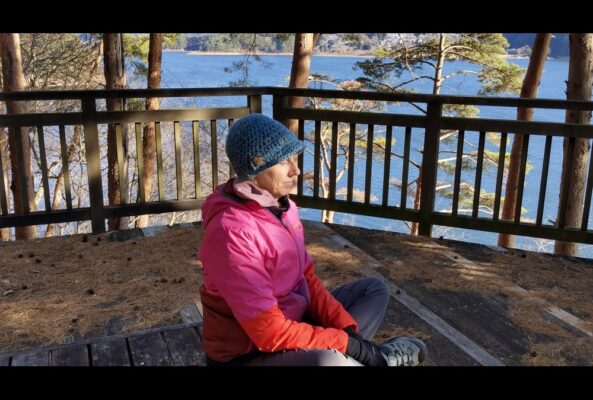 1. Take time to go for walks in nature to be with nature. Watching it and exploring it will teach you something. This is not the same as going into nature to exercise, like running, biking, skiing. Instead, take time to be with nature in a way that is slower, with lots of pauses, noticing the small wonders all around. We are part of nature too! Our mind just forgets that. Nature will keep doing its thing no matter what state of mind we are in at any given moment. It is an amazing teacher.
2. Go to a mirror, Talk to yourself like you would a best friend. Be honest with what you are really thinking so you can truly understand what is fueling a reaction. I think this is like journaling on steroids. Looking yourself in the eye is powerful. This practice is especially important for those of you who, like me, are in helping and caring professions. Take time to care for yourself so you can continue to support others.
3. Start paying attention to your reactions to everything! Asteya challenges us to stop blaming, making excuses for our behaviors and start taking responsibility. We alone are in charge of creating change in our lives – the good, the bad, and the ugly. You get angry and yell at someone. Get curious about that reaction. “Why am I so angry? What was that reaction about?” Keeping getting curious and I guarantee you’ll connect to the deeper cause of the reaction. Most likely it has very little to do with the other person.
IT’S A PROCESS AND A PRACTICE
 Fully embodying Asteya is a process. It will take time…lots of time and practice. So, let go of trying to be something you aren’t, meet yourself where you are at, and slowly you will be come the most amazing you. I like this acronym for fear: Face Everything And Rise. Use fear and all the uncomfortable feelings as guides to let you know where in your life stealing is present. That’s exactly where the change process begins. We can only change what we are aware of! The only way out is through.
Finally, remember, always be kind to yourself as you become aware of the painful parts of the self. We all have these parts. We’ve been taught to avoid, escape or fight them. The truth is they can be some of our greatest teachers. Thank these parts!
 Shanti.