
The slippery side of anger is that it tells us we are justified in our reaction. That justification can lead to saying and doing things that normally, most of us, wouldn’t dream of doing otherwise. And often leads to regret, guilt, and shame when we act on impulses of fueled by anger. So, where does anger start? What can you do to shift from destructive reactions to constructive responses when you feel angry?
REAL WORLD EXAMPLE OF CHAIN OF ANGER

Photo by Orhan Pergel on Pexels
In December 2024, I woke up to find out that in the middle of the night, South Korea went under martial law for 6 hours and then it was overturned by Parliament. It all happened while I was sleeping. I wouldn’t have known anything about it if it wasn’t for Greg’s brother reaching out to us to make sure we were okay.
Things are still unfolding, but life is pretty normal here on Jeju Island, and I’m sure the same is true for most South Koreans. I’ve read a bit about some of the recent political history here since I was curious what would have led President Yoon to declare martial law when no major threats were happening to lead to this decision.
ANGER – THE YOGA PERSPECTIVE
What intrigued me about the chain of events was seeing how unchecked anger, desire, and fear can lead to such an extreme measure that seems to have come out of left field. It made me think of the Bhagavad Gita which talks about the cycle of anger born from desires. It goes something like this:
- A desire for something rises up,
- As the mind keeps thinking about that desire, an attachment forms – ‘I need…’,
- Those desires grow into longings,
- When those longings aren’t satisfied, anger manifests,
- If anger is not dealt with, delusion takes hold in the form of justification, resentment, blaming,
- From that delusion, memory is affected, and the ability to discriminate properly is lost,
- The ability to discriminate fact from story, the story allows reactive emotions and thoughts to take over,
- The person perishes in the downward spiral of their own anger.
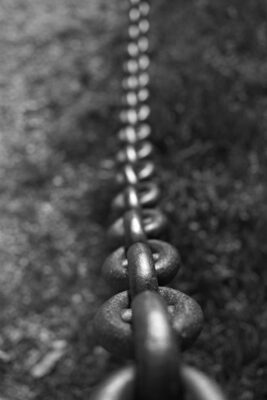
Photo by Luděk Maděryč on Pexels
This recent event is a good example of how the desire- anger chain causes the mind to become its own worst enemy.
Here are some of the initial facts I understood in that first week after the martial law attempt:
Yoon became president in 2022. In April 2024, legislative elections were held and voter’s did not re-elect his party to majority, but rather one of the opposition parties took majority. There had been much discord over budgets and bills that President Yoon wanted to pass but didn’t. the Parliament legislation also launched many corruption investigations into his wife and allies. (Letters From An American, Heather Cox Richardson, 12/03/24)
Viewing this from the lens of the desire-anger chain, my first question is – Where is the desire here?
DESIRE LEADS TO ANGER
President Yoon’s main desire, at least my hunch at the time, was he wants to stay in power as president. He wanted his budget and bills to pass, which did not, showing the decline in his power. His way of doing things came under threat with the legal investigations of his wife and allies.
I can see this long series of desires and wants that came to fruition, and then suddenly all he gained, he started to lose. As his longing to keep things comfortable and as they were, he became angry, blaming others for these losses.
Blaming actually takes power away from us. If we blame, we are saying to ourselves – “I’m not responsible.” If there’s no responsibility, then it means there’s no actions to take, which puts a person in a powerless situation. I can only imagine, in trying to stop the change he couldn’t control, pointing fingers in anger, falling into powerlessness of his making, led to Yoon looking for any way possible to make his desires happen. His desires consumed him (think Gollum in Lord Of The Rings). So, he declared martial law after seeking counsel with his Defense Secretary.
Yoon was at war in his head, so he sought counsel with the person closest to him that was responsible for tactical decisions in times of war.
In this example, you can see how focusing on what you don’t want to happen can ultimately lead to that very thing happening. Yoon wanted to remain in power. His fear of losing that power guided his decisions. In the end, he lost power because that was what he was focused on through his actions – ‘Don’t lose power’. Energy flows where awareness goes.
REFLECT ON OUR OWN REACTIONS
Using this as an example, it isn’t my purpose to vilify the South Korean President. Instead, it’s to show that blaming or getting stuck in a narrow, fearful view of the world can lead to our destruction. Usually, leaving a trail of emotional casualty in the wake of anger and desire.

Photo by Tima Miroshnichenko on Pexels
On some level, we’ve all gone through this anger reaction chain or destruction. Maybe not in such an extreme, public showcase, but if you’re human, then you deal with anger. And anger has a way of taking over and leading us to act without discernment.
Take a moment to reflect – when has anger gotten the best of you?
There’s a saying that comes from AA that a relapse actually ends when a person drinks.
What this means is way before that drink, life brings a myriad of choices each day to face. Each choice will lead someone who struggles with alcohol addiction closer to the decision to drink or lead them away from that decision. By facing choices, desires, longings, anger…there’s an opportunity to make a different choice.
A broader version of this saying is any behavior relapse ends when a person falls back to their old pattern.
We all have behavior relapses. It’s a common part of changing habits.
When it comes to emotions, most of us don’t think about behavior relapses being fueled by an emotional relapse. This desire-anger chain from the BG doesn’t start with a situation or a behavior. It starts within us, in our perception of what will help us feel good, feel enough, feel belonging, feel loved, feel safe.
CHANGING HABITS
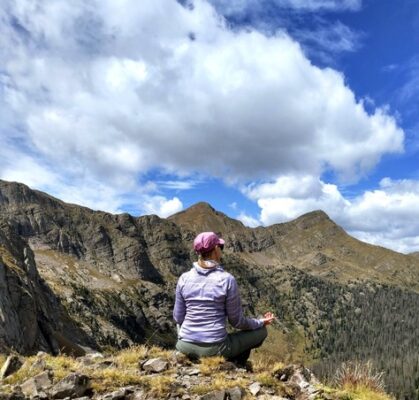 I talk and write all the time about PRACTICE. Practice is doing the same type of action over and over again, until it becomes a habit, i.e. something you do without thinking. To change our behavior, thought patterns, emotional states, and mind states, practice is non-negotiable. Nothing changes without action.
Either you do the action you’ve always done or you do a different one.
We always have the choice to change, even though sometimes it may seem far out of reach or impossible. With practice, we can all make the changes we want in our lives.
And, yes, we have relapses. We make a choice that we know won’t help us get where we are going, but we just can’t help ourselves. The consequence happens and we get a reminder of why we decided to put the time and effort into doing things differently. That’s called learning.
In this ‘kinetic chain’ of desire-anger, the more we are present to what is happening with our reaction, this awareness helps to address desires before they can ever develop into anger. When anger happens, it means there is a desire and longing that hasn’t been looked at and dealt with. Those desires come from unmet needs.
It’s not good or bad to have a desire or longing. It’s part of being human. But, it is our responsibility to be honest and face these desires and consciously make a choice. Then whatever the consequence, it’s also our responsibility to face and deal with it.
Just explore for a moment – does my anger come from desires, wants, and longings?
EVERYDAY DESIRE-ANGER CHAIN
Recently, I had a desire for something sweet. On my pantry shelf was a barley-based snack. I had just eaten my last piece of fruit in the morning, so I opened the snack and took a bite. It was stale! I laughed at myself and asked what I really needed? I needed to rest. My realization was I felt tired from not sleeping well the night before. I wasn’t hungry, I was tired.
In the past, when I wasn’t as aware of my mind-body communication, this unsatisfied desire might have led to me continuing to think about the sweet taste in my mouth, longing for something ‘better.’ Then sent me out searching for that sweet treat, spending time chasing a story, instead of addressing what was actually the issue.

WE ARE HUMAN
We are human and we will have desires, wants, and longings. What areas in your life do desires have control over you? Do you use your self-awareness and discernment to consciously make choices? Or do you keep finding yourself in places of peril, acting and behaving in ways that are opposite to what is best for you?
Of course, there’s also a lot in between those two polar opposites! Most of us are living in that gray in between, trying to satiate desires, never bothering to explore and see what they are really communicating to us. Just like the former Korean President, it’s easy to want to force things to be what we want, instead of meeting the world where it is at.
As for President Yoon, on one hand, my heart went to him. It sucks to not get what you want. I know…it’s happened to me plenty of times. On the other hand, I hoped he would ‘waked up’ and take this experience as an opportunity to take stock, reflect on his behaviors, and take responsibility. Unfortunately he did not. He was impeached and sent to jail.
BREAK THE ANGER CHAIN
The way to overcome the kinetic chain of desire-anger is:
- Take responsibility for your actions, thoughts, and emotions
- Strengthen your skill of self-awareness
- Cultivate curiosity into YOUR reactions, not focusing on others
When you have a desire or if anger is boiling up, it is something to sincerely face and look at so that it doesn’t end up spiraling you into ruin.
No need to worry – just keep up your practices!
 Shanti.
P.S What is your reaction when you read the word ‘practice.’ Are you thinking – ‘What practices?! What am I supposed to practice?!’ It’s all good – I’ve been there too. And so have most of the women I’ve supported. Feel free to reach out or schedule a time to connect so we can talk about what practices might be worth your time to focus on.