
I’ve spent the past two months watching an ending and a beginning manifest before my eyes outside my window. The ending was a building being dismantled from top to bottom. The beginning was seeing two open fields cleared and then surrounded by a tall fence as preparation to build a new international school began. Endings and beginnings are always happening. It’s the nature of the material world. Anything that is impermanent will change. Everything impermanent has a beginning and an end. Even though we intellectually know this, it can be hard to truly accept this. Why do we cling to things despite knowing things are impermanent?
BASIC INSTINCTS TO SURVIVE
We are wired at the most basic, biological level to survive. At least that’s the wiring of our body and mind.
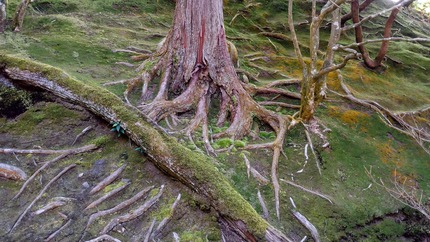
I was at a gallery recently that had an exhibition of a specific species of tree roots found on Jeju Island. The wood of these roots is hard to burn and it doesn’t float well. It’s dense. These roots are works of art from the way they grow into the porous volcanic rock. Twisting, finding small holes to grow into, melting into spaces. They were living out their innate programming to survive.
As humans, we don’t really have spaces we have to fit into to anchor and grow. Instead, we have relationships. Relationships with other humans help us to survive for the first years of our lives. This time period shapes us in so many ways and this is the foundation we continue to grow from the rest of our lives.
A YOGA PERSPECTIVE
Photo by pipop kunachon on Pexels
From a Yoga perspective, this life is just the latest in a long line of life experiences. And from each life we experience, we bring to the next life part of the ‘wiring’ from the last one. The wiring from each life experience builds on each other, strengthening survival instincts.
I used to be a pack rat. I would collect things and keep moving with them. It was hard to let go because of the memories associated with those items I had accumulated. After a dozen moves, I had quite a lot of ‘stuff’ that just ended up being in storage. Even though I couldn’t see those boxes on a day to day basis, they were still there. I still had an attachment to them. .
This is what happens as we move from one life to the next. What we are ‘carrying’ at the end of one life, comes forward into the next. Over and over it builds up, unknowingly influencing us and keeping us from truly understanding ourselves.
In this life we are human. But we have layers of the past on top of all the human wiring. There’s a common wiring to all life – that basic need of survival. And we are carrying many, many, many layers of this basic need of survival. It’s powerful. Just like those tree roots on Jeju Island, our instinct is to do what must be done for survival.
Even if it disconnects us from accepting the reality of impermanence and change.
ABHINIVESHA, THE CREATION OF CLINGING
Hence, the Pancha Kleshas – 5 obstacles to peace of mind – are created:
- Avidya: Ignorance of True Self
- Asmita: Roles and Identities
- Ragas: Attachments/ Likes
- Dveshas: Aversions/ Dislikes
- Abhinivesha: Clinging, Fear of Death
As you start at the top and go down through these five obstacles, clinging is the final outcome of ignorance to our True Self.

Photo by Janos Kerekes on Pexels
We cling at the level of the physical, energetic, emotions and thoughts, beliefs, and the sensation of bliss. The five layers of being human. With all that clinging, it’s no wonder it’s so hard to let go of fears – even if we know it’s what we need to do. We have learned to go with fear over facts of the present moment.
But we can change this. It can happen, even though it’s difficult to do.
Just like in the Bhagavad Gita when Arjuna says in Chapter 6 to Krishna that trying to calm the mind is like trying to control the wind and Krishna agrees. But he then states it is possible to do with consistent practice over a long period of time.
CONTROLLING THE WIND
Let’s first get curious about controlling the wind, since this is the analogy that Arjuna brings up.
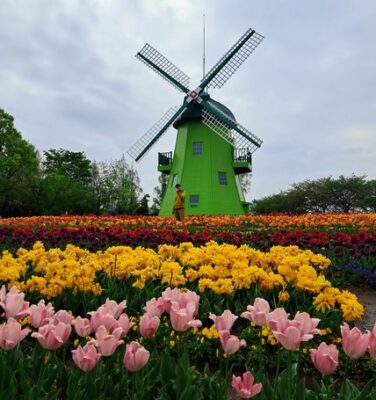
We can’t really control it by grasping or holding it. Rather, we can harness its energy through wind farms and windmills. Or averting it through strong structures that withstand the energy of the wind, diverting the wind’s energy to create a block.
I love watching trees in the wind. They have found through the stability of their roots and the flexibility of the branches to move with the wind. They have learned to adapt to wind and use it to help spread seed to help with their survival. The strength of a tree actually depends on the wind to help build its root system and the ability to stay grounded. A tree can’t avoid or stop wind, so it uses the wind as a resource.
 Impermanence is a part of being alive. We can’t escape it or change it. The body we live in is going to grow, age, decay, and die. So will the bodies of all those who we love and cherish. And pain will be a part of this process.
If we can use this example of how to harness and use the winclingingd and apply it to impermanence, it can transform into a teacher and guide on the path to Self-understanding. The awareness and knowledge of it can help us to move beyond basic survival instincts and use it as a resource to Self-understanding that decreases our suffering.
REFLECTION
❓ What are 3 lessons that the impermanence of the world has taught you?
❓ How have those lessons increased your understanding of who you are and who you are not?
❓ In what ways does that understanding help you in continuing the practices that help you keep facing life’s impermanence?
Our basic survival instincts will still get fired up in this process of acceptance, awareness, and self-understanding. The goal is not to stop that from happening. Rather, focus on being aware when it’s happening and use those practices you’ve committed to doing consistently, over a long period of time.
That is how to address aspects of Abinivesha or clinging to roles, identities, likes and dislikes, attachments and diversions, and ultimately this body-mind system we’ve been given to experience this life.
Remember..
𖹭 Accept when clinging is happening. It will happen as it’s a part of our basic survival instinct.
𖹭 Turn inward and explore when you notice clinging. Remember, it can be to both things we like and things we don’t like.
𖹭 Do your practices that invite the clinging to loosen. Eventually, over time, it will completely detach. No need to force it – that only increases clinging. Trust the process of Yoga.
 Shanti.