One of my students recently sent me a quote from someone who wrote about the Bhagavad Gita, which touched her. We had been messaging each other about the reality of the Yoga Asana class I teach at her home being cancelled due to the recent flooding in the Bangkok area. These words helped to put things in perspective. I wanted to use this month’s blog to pull out the wisdom of the words that touched her because they are important reminders for daily living.
“In the Bhagavad Gita, Krishna advises Arjuna not to be distracted by chasing happiness or dodging distress, but instead to lean into the awareness of that which is indestructible: Consciousness. The yoga is not in arranging life so that we only get one side. The yoga is in how we meet both.” – Unknown
THE CHARACTERS OF THE BHAGAVAD GITA
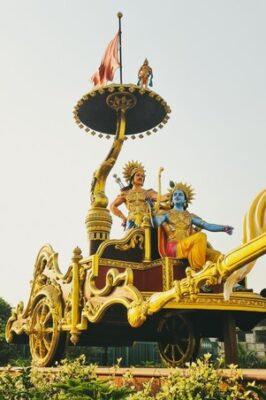
Photo from Pexels
In the Bhagavad Gita (BG), Arjuna, a great warrior that is renowned and admired, has been stricken by doubt and grief before a great battle which is unavoidable. He sees loved ones on the other side and foresees the great pain that will happen. He wants no part in it, so collapses in his chariot, refusing to go to battle.
Krishna, Arjuna’s charioteer, friend, teacher, and representation of the Divine, shares the wisdom of Yoga to help Arjuna remember himself, his duty, and the reality of the situation. One of these morsels of wisdom is the thread that runs through all paths of Yoga: Seek the Truth of That which never changes and be relieved from the suffering of life. That’s a massive outcome, so let’s dive into the practicality of this quote.
KRISHNA’S ROLE OF ADVISOR
First, I want to turn our attention to the word ‘advises.’ This is an important word. Many times, the voice of God or the Divine, especially in more western religious traditions, is portrayed as the ‘end all be all.’ Do what God says or else bad things will happen. In Yoga, the voice of the Divine is more of a teacher, sharing wisdom from personal experience, and then the student is told to take that information to explore and find their own conclusion.
At the end of the18 chapters that make up the Bhagavad, Krishna declares “This wisdom, most profound of all secrets, has been declared unto thee by ME; pondering over it fully, do as thou likest.” (BG 18.63) Krishna is encouraging Aruna to take all of the teachings that have just been shared with him and reflect, practice, and explore to find his own clarity and Truth. Practice and self- exploration are key components of Yoga. The wisdom is not to be followed blindly.
Therefore, all the words that are to come next, both in the quote and in this blog post, should be met in this spirit:
Here is some ‘advice’. You decide what you want to do with the information in regard to your life.
KRISHNA’S ADVICE
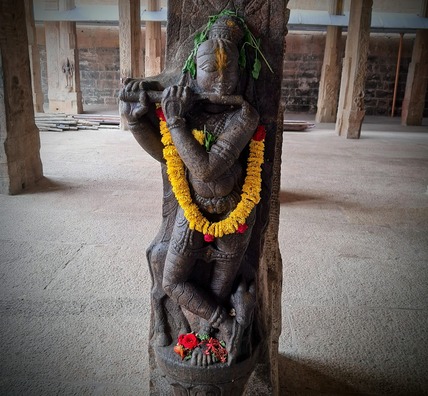
Krishna
There are two parts to Krishna’s advice:
A. Take caution to the mind’s tendency to get distracted from what’s important. Distraction happens in the form of chasing after seemingly pleasurable things or avoiding anything that causes distress.
B. Fix your awareness on exploring what never changes and can’t be destroyed: Pure Consciousness. (Pure Consciousness, Purusha, True Self, True Nature, God, Divine, Atman etc. are some of the words that are used to describe the same eternal principle).
The tricky thing about this advice is how easily the mind can turn things into ‘either/or’ and ‘all/or nothing’ categories. These two pieces of ‘advice’ can be turned into ‘what-I -already-should-be-doing’. Now judgement has come into the mind, pulling the mind back into a black and white view of the world. Judgment keeps us stuck in the cycle of pleasure and pain, chasing and avoidance which is at the heart of our suffering as human beings.
The practice (yoga) is to see and understand that these seemingly opposites end up similarly because pleasure turns to pain, pain becomes pleasure…
Over and over. Up and down the mind goes.
Yoga is a system that helps the mind accept the changing reality of the material world. One that helps us to meet both pleasure and pain in order to calm the pendulum swing of the mind. According to the BG and Krishna, this calmness will help us to know the essence of the Self which is everlasting and nonchanging. One name for ‘That Which Is’ is Consciousness.
Let’s get more practical with these two pieces of advice.
THE DISTRACTED MIND
Many people who start taking Yoga Asana (pose) classes, if the teacher is using the poses to help students cultivate self-awareness, quickly observe how distracted the mind can be.
🪷 Guided to fold forward, the mind notices the toes and the dry spot on the side of the right big toe that it hadn’t seen before. Instinctually, the hand goes to the toe to pick off the dry skin…
And then the mind realizes everyone has stood back up. Distracted, it missed the cue.
🪷 Laying on the back in a side twist, the stomach grumbles and the mind starts to think about lunch, grocery shopping, dinner from last night, the argument that happened and sadness comes bubbling up.
🪷 Class ends and the mind is calm. You stand up, roll up your mat, and move slowly while enjoying the calm. Someone else starts sharing about feeling good after coming to class stressed from work. Another person asks what they were stressed about and all the sudden everyone is talking about stress again. The mind has begun to race with worries again.
What are the common mind distractions you’ve noticed during a Yoga Asana class or just in your daily life?
The mind is subconsciously always scanning the environment for danger and negativity. This is part of the survival wiring of our biological makeup as a human. The wiring to seek pleasure and avoid pain is part of almost all living beings as a mechanism for survival. Humans also are mammals, so another part of our survival system is connection to one another. This shows up as a need to feel belonging, love, and acceptance.
Reflecting on what distracts your mind, do those behaviors link back to pleasure seeking, pain avoidance, or the need to belong?
This pattern doesn’t mean there’s something ‘wrong’ with you – it just means you’re human.
MINDLESS VS MINDFUL
Krishna’s first piece of advice is heeding caution toward our initial reactions, asking us to learn to slow that process down and not let it run our lives. This would be living ‘mindlessly’ or in ignorance of what is happening within us. In turn, this leads to a misinterpretation of the ‘problem’ that suffering is caused by the external world…rather than the actual cause within the mind and the lens through which it interprets or ‘sees’ the problem.
Mindfulness is the opposite – becoming fully aware of the mind and its operations. From that space, conscious choice can begin.
What actions help your mind to slow down? Become present? Recognize choices and options you have in a situation?
Understanding the answers to these questions will help you to connect with consciousness. This type of relative consciousness I define as present and aware.
THE IMPERMANCE OF PLEASURE AND PAIN
Pure Consciousness is That which is permanent and beyond change. Everything else is subject to cause and effect, change, and fluctuation. In Patanjali Yoga Sutras and Sankyha Yoga this is called Prakriti. Both the experience of pleasure and pain are fleeting. They happened for a moment, maybe longer, but then they change. This is one of the laws of nature: Anything that can change, will change.
But how many times do we find ourselves refusing to accept the reality of change through attaching to things that make us feel good? Or avoiding things that gave us pain?
- Reaching for another cookie or glass of wine,
- Saying ‘no’ because we feel nervous,
- Treating a child like they are 11 years old, even though they are now 30 years old?
- Not washing a game jersey because you won the last three games while wearing it?
- Keeping clothes that no longer fit.
All of us have hundreds of examples of this.

Clinging to pleasures
When we cling to pleasure and pain, the mind is distracted from being in the present moment. Consciousness only exists in the present. Since we don’t know the experience of Pure Consciousness, we must start by cultivating relative consciousness, being present and aware as much as possible in our daily lives. Aware of what is happening with the mind during reactions and aware of the lens we are viewing the world through.
The more we are focused on past and future stories that don’t actually exist in the present, the more distracted the mind will be. The more present the mind, the more conscious we are. Pure Consciousness can only shine through when the mind is completely in the present.
PRACTICE RELATIVE CONSCIOUSNESS
3 Practical Practices of Relative Consciousness:
1. Use your senses to become aware of what is happening in your environment right now. What do you see, hear, smell, feel on the skin, taste?
2. Turn awareness inward and notice your inner experience – what you feel in the body, emotions that are present, the quality of the breath, and the thoughts running through the mind.
3. Cultivate a sense of Gratitude towards all situations in your life. This moment exists because of all that came before. This moment will have an influence on what comes after. Pause and be present to gratitude in the ease and the dis-ease of life.
GET CURIOUS ABOUT WHAT DOES NOT CHANGE
We can readily explore and identify what does change due to our personal experiences. We don’t know the true experience of Pure Consciousness. But, our experiences with change can lead us towards understanding what is beyond change.
Borrowing from a topic mentioned at the last YFTMC Zoom Call, let’s look at similarities. When we look for what connects us to ourselves, other people, the environment, and all that does change, what happens?
I know for myself, when I connect with similarities, that connection calms my nervous system. It’s like being held by someone I trust and love. It’s like a deep exhale.
In recognizing similarities, there becomes an opportunity to recognize that everything comes from one source. If we were to trace all cause and effect back to its origin, no matter where you started, the end would be the same – consciousness in its purest form. That is where lasting happiness lies. Not in the differences or opposites but where opposites meet. A practice that refines the mind to see this more readily leads closer and closer to the experience of Being Pure Consciousness. Or so this is what Krishna’s wisdom suggests.
I want to also caution here that differences are not ‘bad’ or negative. All the variations of Pure Consciousness which have manifested and evolved over millennia are amazing! The combinations are almost endless. Present on this Earth right now are over 8.3 billion combinations of humans, each with their own uniqueness. How beautiful and something to admire in awe!
Is there a way to hold this uniqueness and the underlying similarity of it all?
Whew, let’s bring it back down to the practical.
3 PRACTICAL PRACTICES
3 practices to explore That which doesn’t change:
1. Let go of judging the world, putting it into ‘right’ or ‘wrong’, ‘good’ or ‘bad’, ‘either/or’. Pure Consciousness is beyond these dualities. So if you can practice viewing a situation in its pure form, rather than creating a story about it, judging it, projecting our expectations on it – what happens?
2. Decrease The Noise And Increase Silence. Start externally decreasing noise. Turn off podcasts, music, the TV, YouTube and be present where you are. Let your ears rest.
3. Take Time To Do Nothing. It’s very challenging for most of us to just sit, relax and be. We have been taught our worth is equal to our productivity. Being ‘busy’ is a badge of honor…which is actually creating more chasing and avoiding.
DEFINING YOGA
The way the term ‘yoga’ is used in this quote is different from the definition you may be used to, especially in modern terms.
I was just at an entrepreneur gathering and yet again, when people hear that I’m a Yoga counselor and coach, their minds immediately go to asana or poses. This is just the definition that is seen and heard most often.
 The term ‘Yoga’ is one that’s evolved over thousands of years, so it’s only natural that there are many definitions: Union, disunion, a path of self-realization, a practice, complete cessation of all thoughts, doing work with the mind focused on the Divine, service to others…the definition list is a long one. This means it’s important to clarify the definition you are coming from.
In these two sentences from the quote above, yoga means action through practice. Specifically, the practice ‘advised’ is to face and explore both pleasure/happiness and pain/distress when they arise, not clinging to one and avoiding the other.
The view of Yoga is that pleasure and pain are similar in that they both are ever changing. They are opposites of the same spectrum and if that spectrum is turned into a circle, these two ends (pleasure and pain) become one in the same. Thus, both need to be examined to release suffering and truly know Pure Consciousness – which is beyond the experience of pleasure and pain.
Yoga is a means and the end goal. It is a path, process, and a state of being. Yoga Asana is one technique out of many in that process of ‘Being.’ It’s not the only technique, the ‘best’ or ‘proper’ way. Many, many Yoga practitioners and Yoga Masters never do even one Yoga pose.
YOUR TAKEAWAY
The invitation in this quote is to take action and practice. There’s nothing specified about what that is for you because you must be active in finding your path. It will be different than another’s path. To know if your practice is ‘working’ is if it leads to acceptance of the nature of the material world, releasing you from the notion of ‘good/bad,’ ‘right/wrong’, ‘either/or/’. If you find yourself chasing, avoiding and judging more, stop and examine what you are doing.
This reflection is my own and comes filtered through the lens I currently view the world. Please do not take it as ‘right’. Explore these words for yourself. What do they mean to you from your point of view? Maybe there’s something I wrote that stimulated resistance for you. Or maybe it resonates? Take time to let it percolate and see what wisdom you draw forth to apply to your life.
What is your takeaway?
 Shanti.